
A bill-splitting app concept, taken from brand to marketing site in a single month. The bet: the category already does the math, so win by closing the loop on payment and wearing a friendlier face than the incumbent.
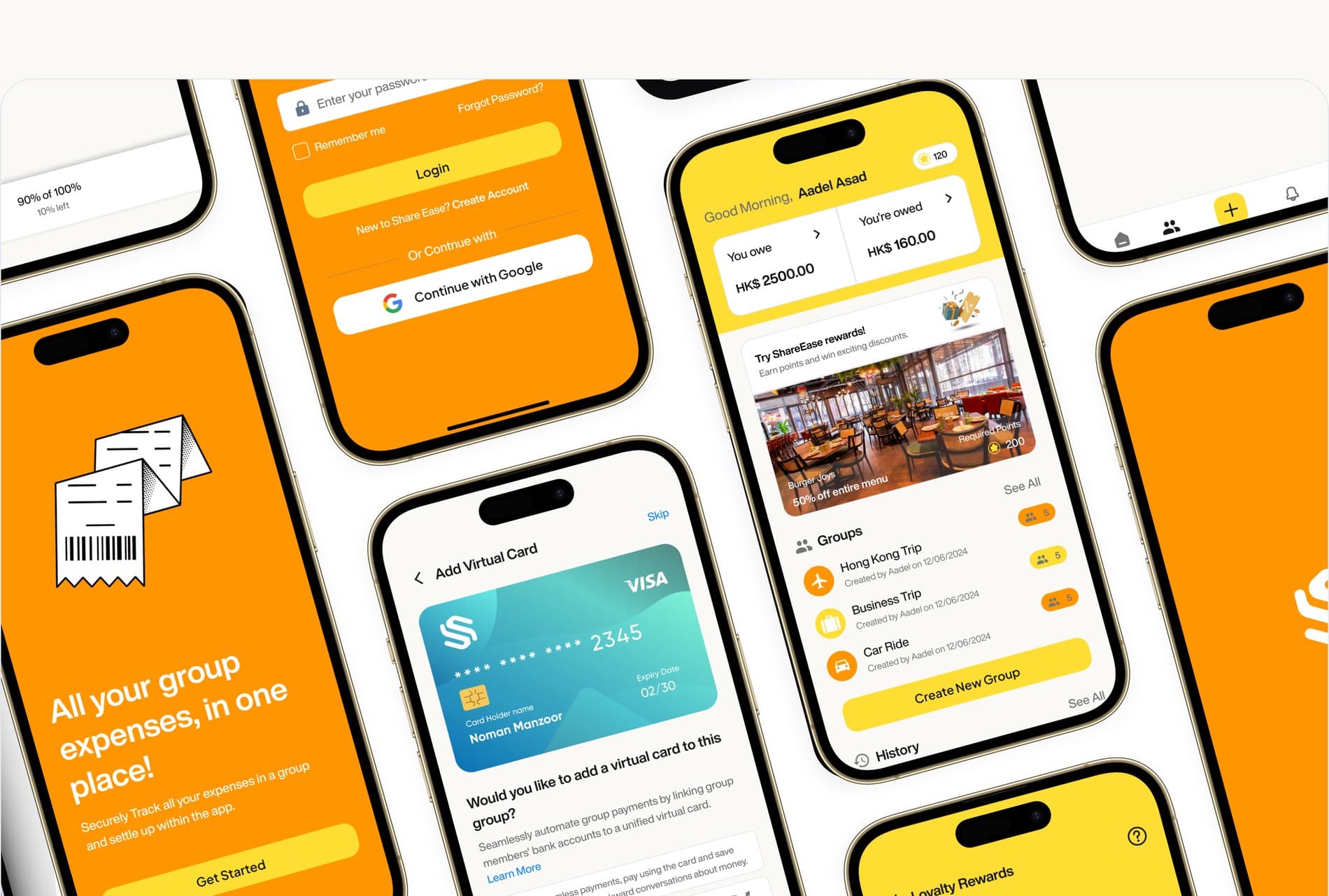
What is Share Ease?
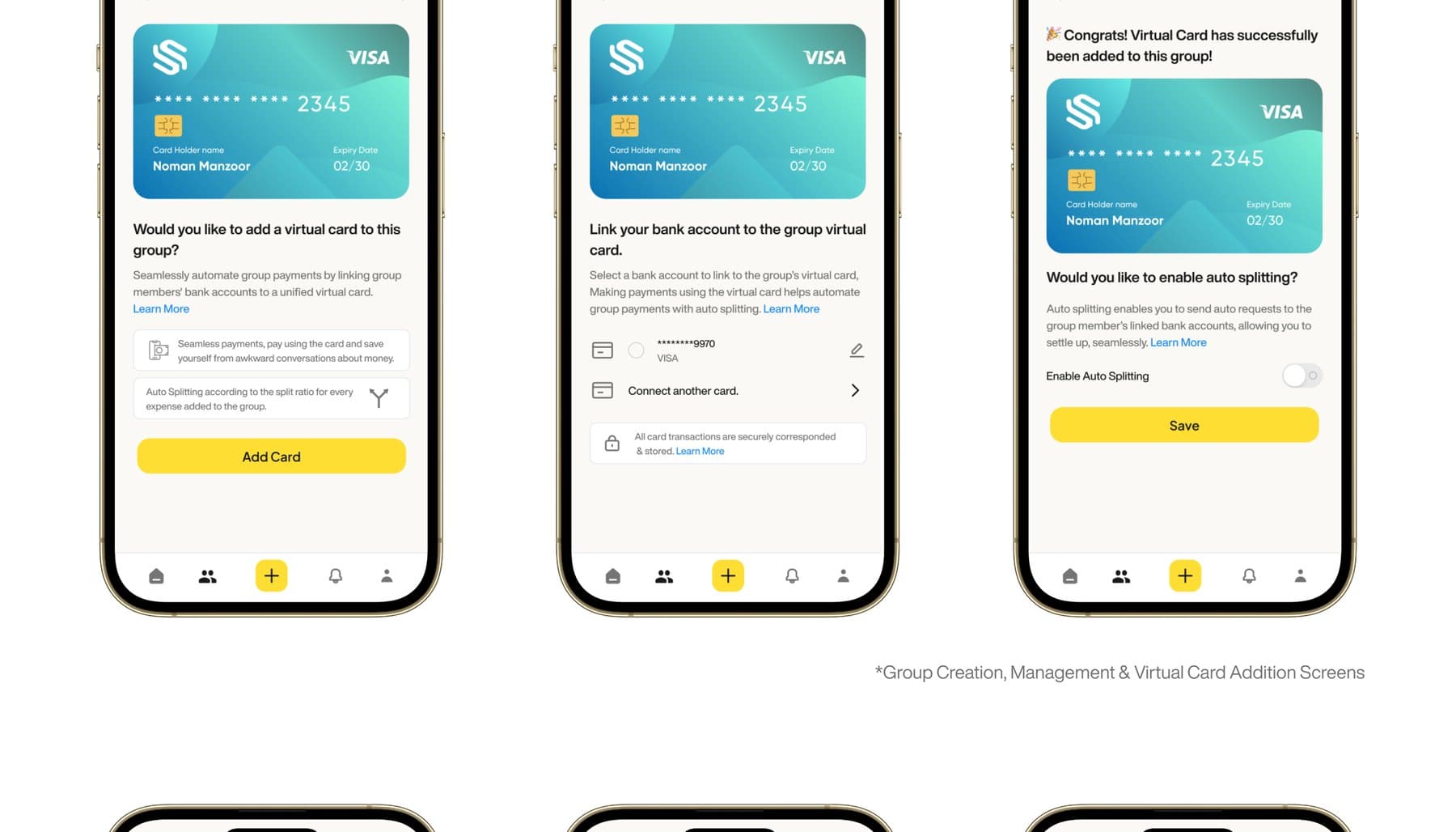
Share Ease is a bill-splitting app. Create a group, log what everyone spent, split it, and settle up, all the way to the money actually moving. It pairs the usual expense tracking with a group virtual card and in-app payment requests to linked bank accounts.
Why this project?
A one-month client concept, designed end to end. Splitwise owns this category but feels dated and stops at the math, leaving the actual payment to a group chat. The opening was a modern, friendly app that closes that last gap.
Splitting a bill was never a math problem. It's a social one. The awkward part isn't the arithmetic, it's asking a friend for the money.
Every competitor already tallies who owes what. Parity on tracking earns nothing. The unsolved part is everything after the total.
Splitwise and Settle Up stop at a balance, then send you back to a bank app or a group chat. The awkward ask survives.
Bank-grade UIs read as serious and dated. A money app that wants to feel friendly has to look nothing like the incumbent, without looking unsafe.
One month, end to end
Brand, UX, UI, an interactive prototype and a marketing site, solo, in four weeks. Scope discipline was the project.
A crowded category
Splitwise, Settle Up and Cino already own bill-splitting. Parity was table stakes, so the work had to earn a reason to switch.
Real money, real trust
Linking bank accounts and a group virtual card means the interface has to read as safe and legible first, clever second.
Familiar flow, unfamiliar face
The journey had to stay as recognizable as Splitwise so switching costs nothing, while the surface had to feel nothing like it.
The job isn't done when the math is right. It's done when the money has moved.
Close the loop. Settle inside the app.
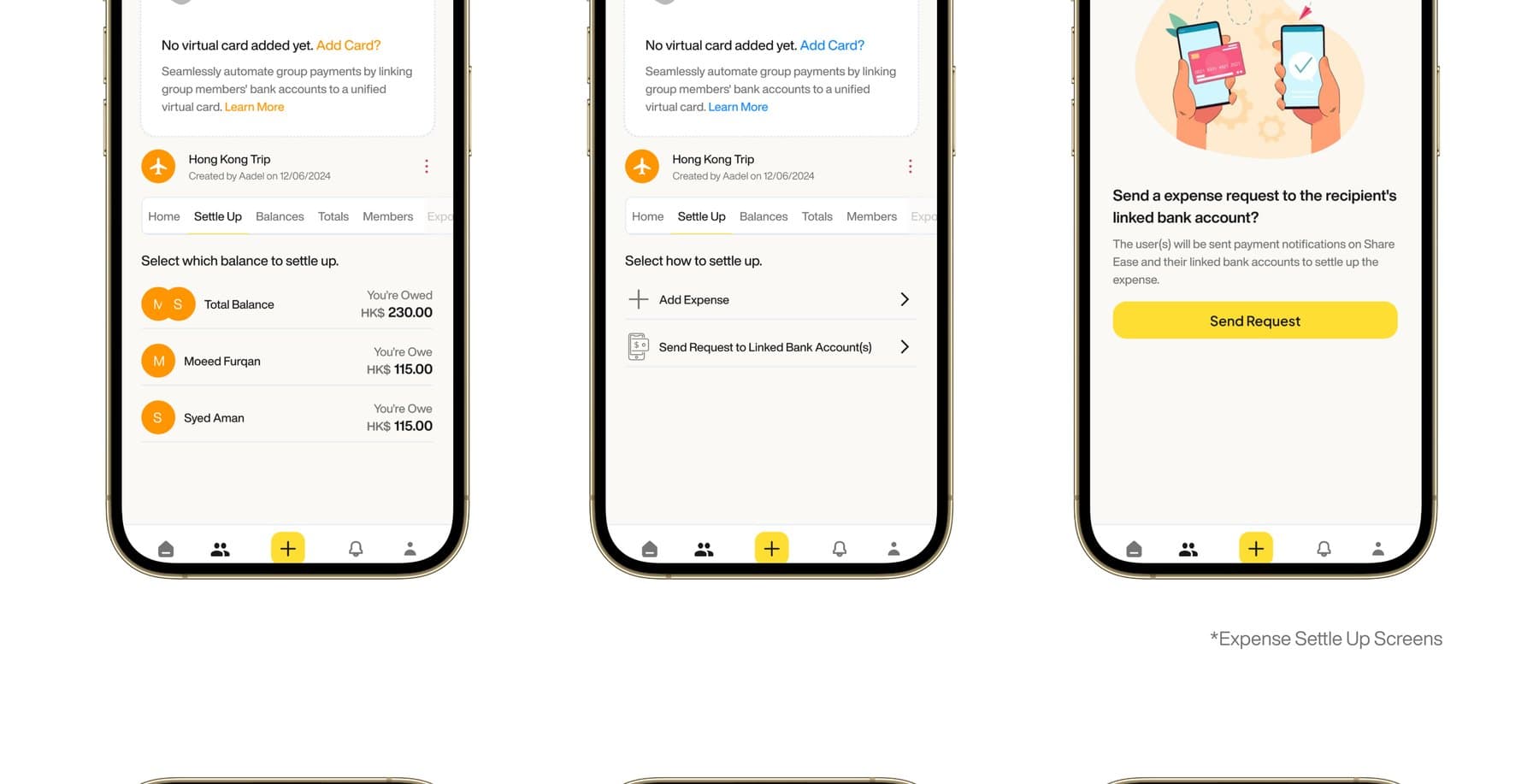
A settle-up flow sends a payment request straight to a member's linked bank account, so the balance clears without leaving Share Ease.
Link the group's accounts once and a shared card splits and deducts every expense for you, removing the chase-down entirely.
When money moves on its own, nobody has to send the 'you owe me $16' text. That was the whole point.
Bet the difference on craft, not features.
The competitive audit was blunt: the market leader fails the modern user because it lacks a modern, minimal look. That was the wedge.
A bright orange and yellow system, rounded forms and an interlocking-S mark, built to feel approachable rather than corporate.
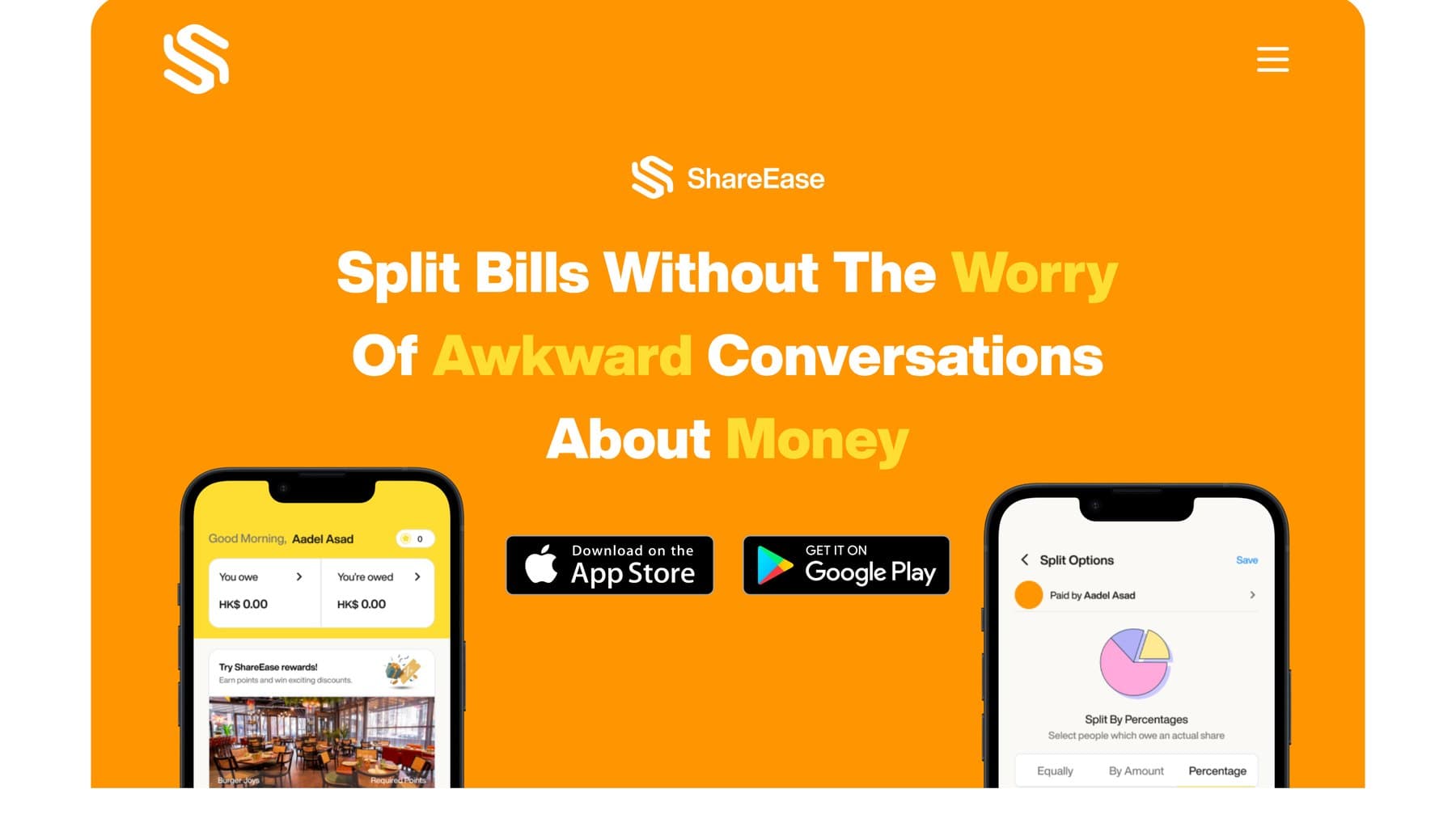
The whole brand speaks to one fear, no awkward conversations about money, instead of listing fintech features.
Reward the everyday, not just the spend.
Creating a group, adding an expense, settling up, all earn loyalty points, so routine actions build toward something.
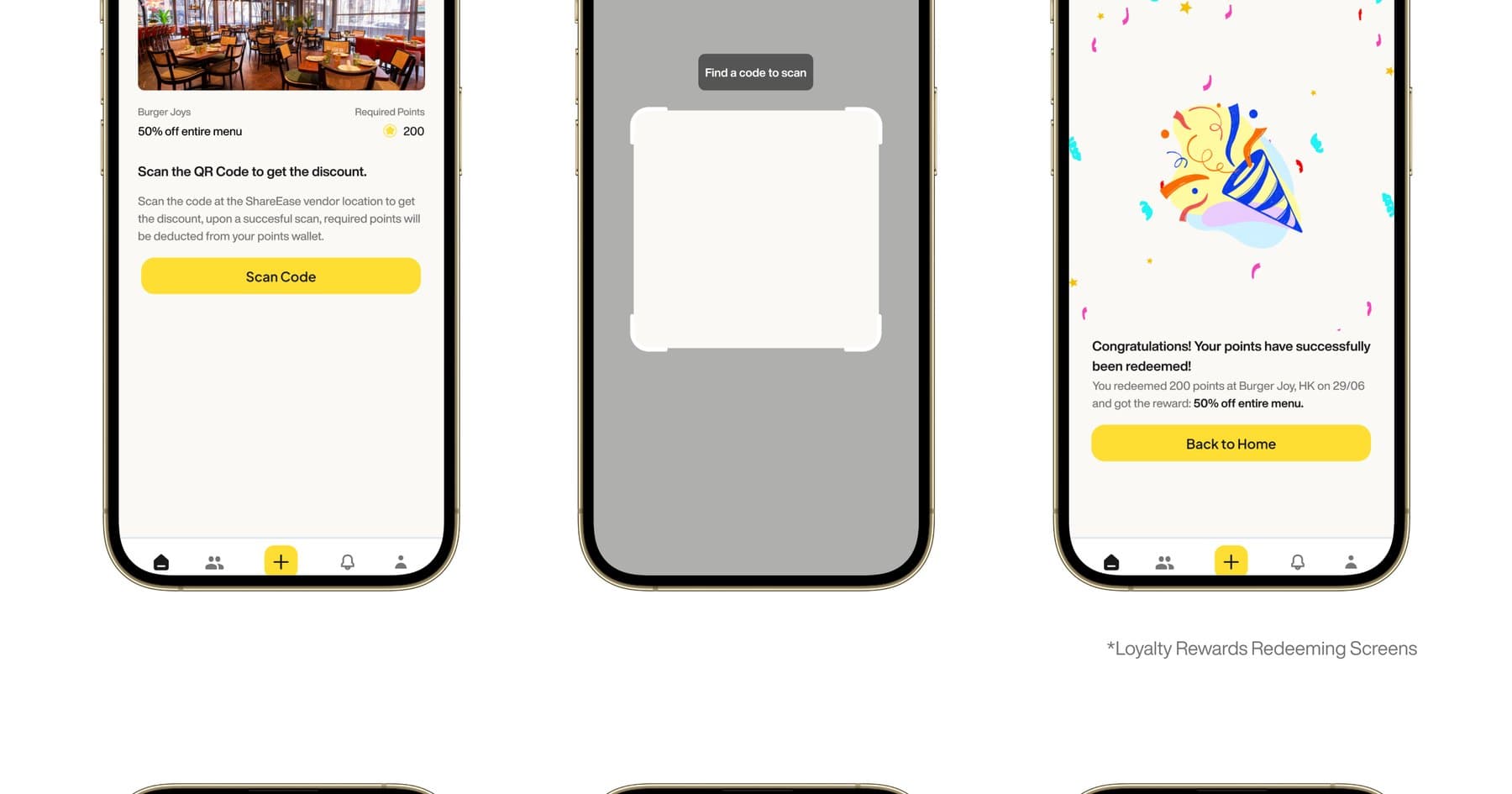
Scan a QR at a partner restaurant to cash points in for a discount, tying the app back to the meals people split in the first place.
A bill-splitter you only open when someone owes you is a calculator. Rewards give a reason to open it the rest of the time.
One split screen, three ideas of what's fair.
Fairness isn't one formula. Someone wants to split evenly, someone wants exact amounts, someone thinks in percentages. So the split screen is a single component that renders three ways: a balance for an even split, a pie for percentages, an itemized list for amounts. Same screen, same muscle memory, with a running total that always reconciles to the bill.
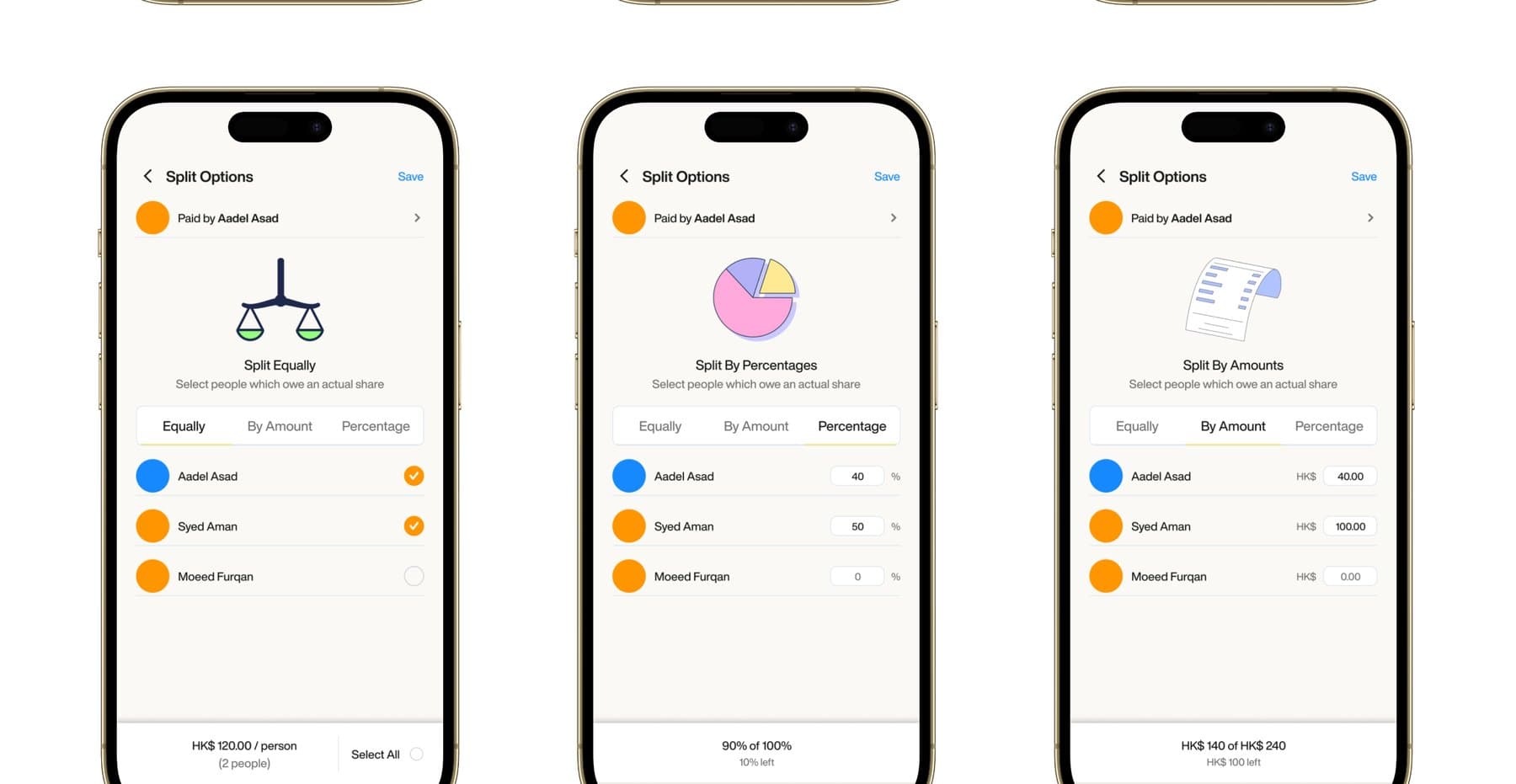
Fairness is something people feel, not a setting they configure. The interface should bend to the intuition, not the other way around.
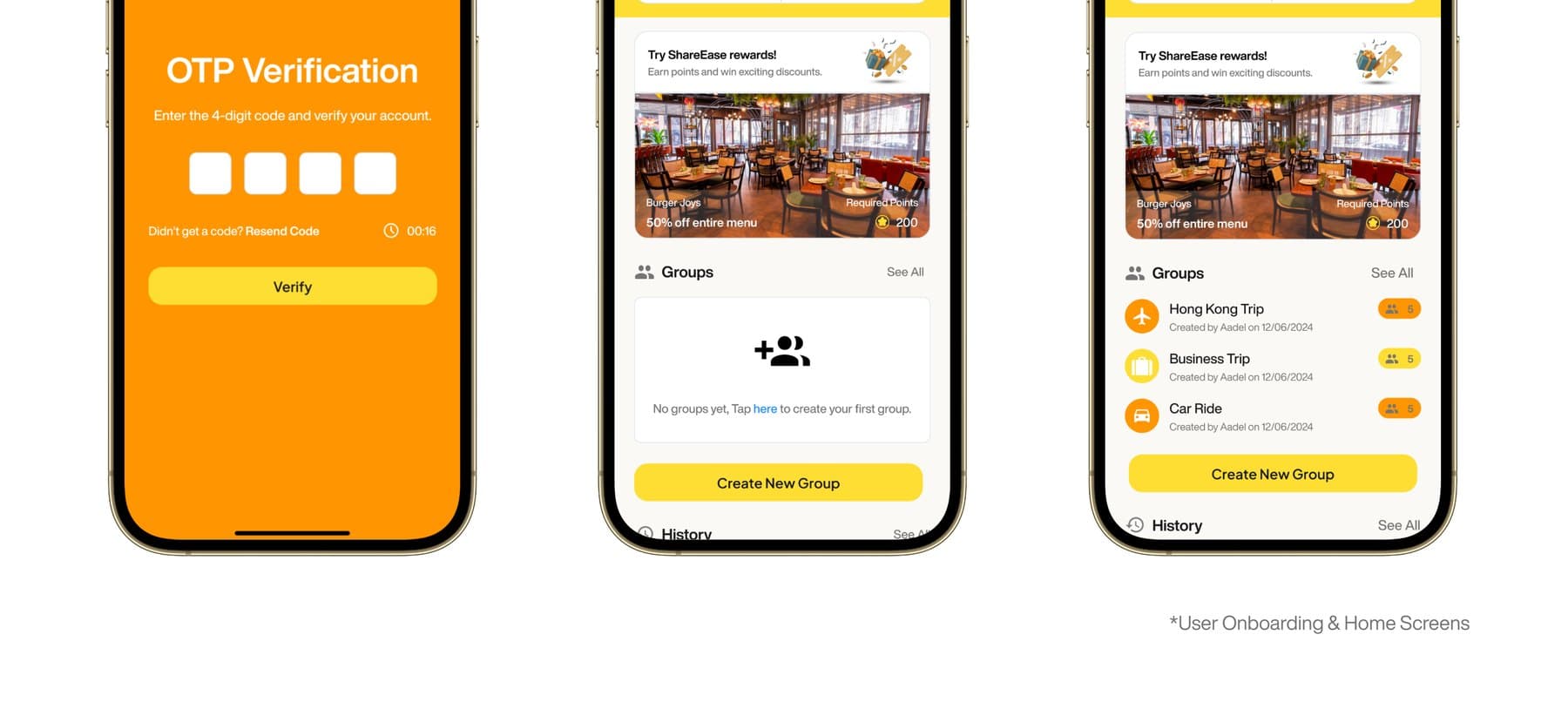
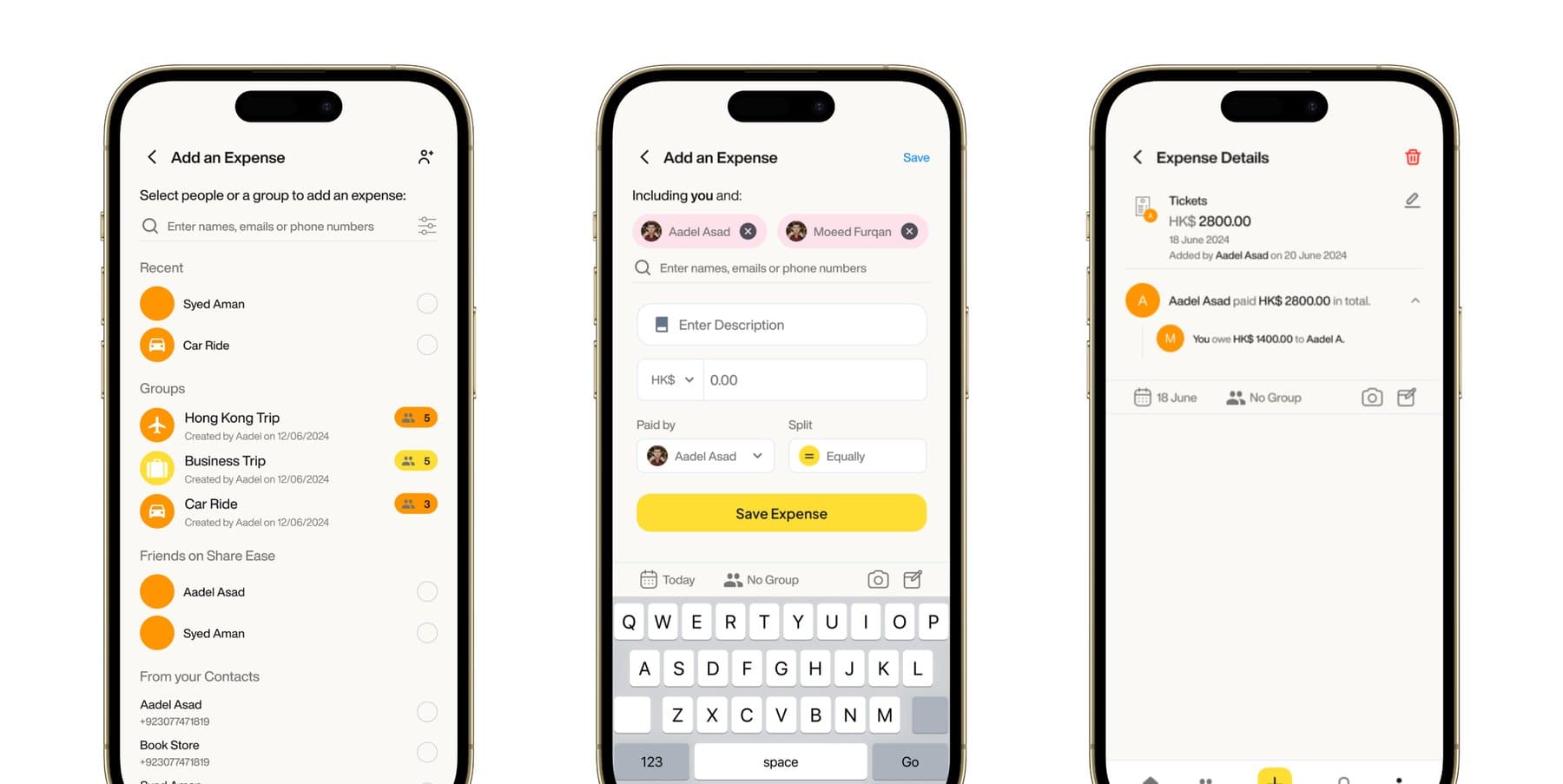
A complete product concept, shipped to development in a month.
Brand, app, interactive prototype and marketing site, delivered end to end and handed to a React Native build.
Four surfaces from one designer in four weeks, held together by a single system and one promise.
In development for iOS and Android. No public launch yet, so there are no usage numbers to claim.
The honest outcome is a finished concept, not a shipped metric. What held up was the spine: closing the loop on payment is the one idea every screen serves.
Parity is the floor, not the pitch
In a solved category, matching features changes nothing. The audit pointed straight at the gap, a dated incumbent, and that gap became the whole strategy.
The product ends where the money lands
Tracking a balance is the easy 80 percent. The reason this concept exists is the last 20, getting the payment to move so the awkward ask disappears.
A friendly face is a feature in fintech
Trust and warmth aren't opposites. A bright, plainspoken brand did more to make a money app feel usable than any extra setting would have.
Ship the React Native build
The design is done. The real test is the live app on both stores and the first real settle-up.
Pressure-test the virtual card
Auto-splitting real money needs the edge cases, refunds, partial pays and disputes, designed before launch, not after.
Earn the second open
Rewards are the hypothesis for retention. Instrument them and prove people come back when no one owes them money.
Localize beyond HK$
The concept assumes one currency and region. Multi-currency groups are the obvious next market.